
These Woods Are Haunted
Musings on a sub-genre of paranormal reality TV

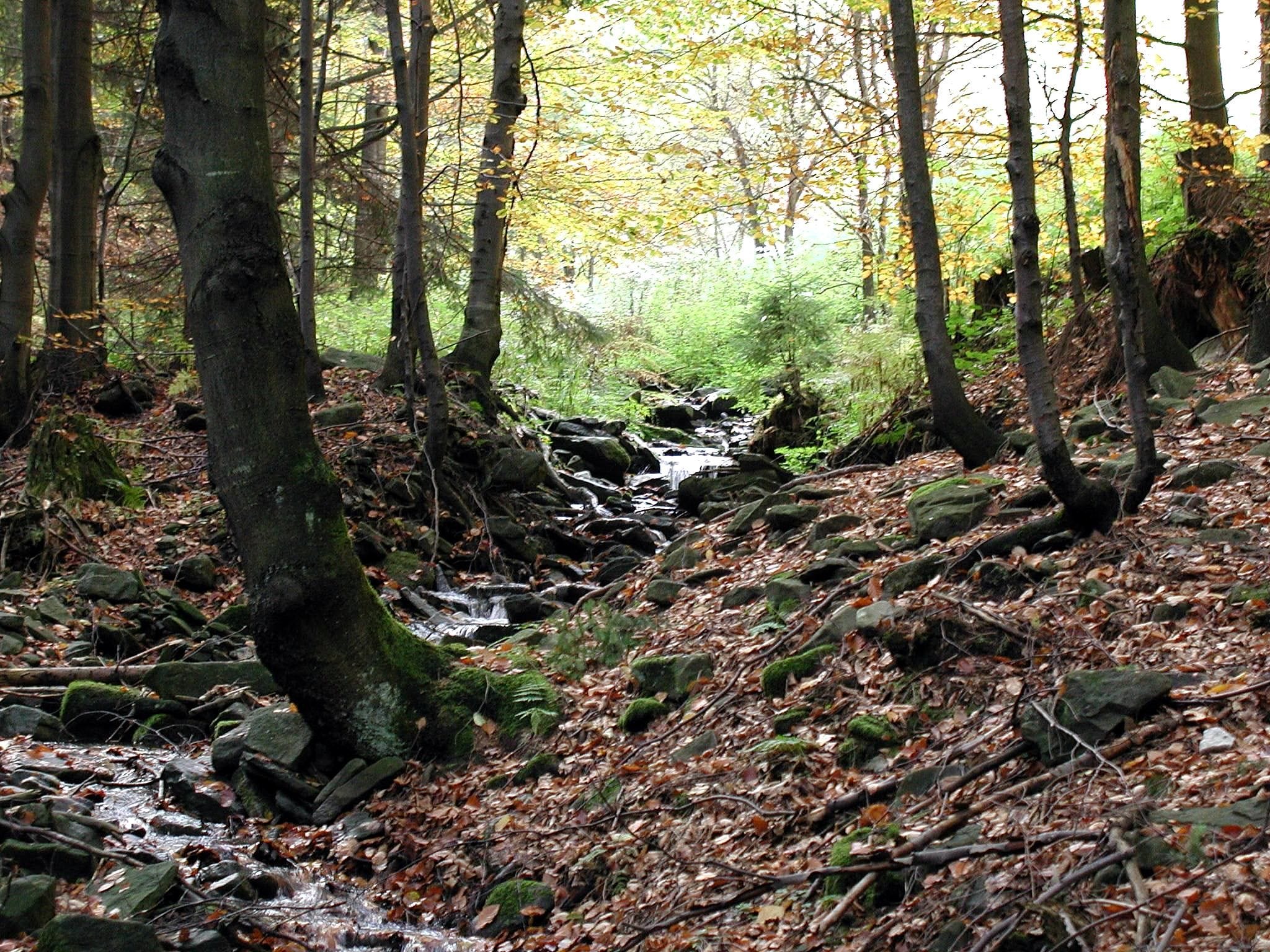

Back when I was still writing my dissertation, two of the paranormal shows I particularly enjoyed watching involved first hand accounts and re-enactments of reportedly real-life spooky experiences in the woodlands of North America. Fear The Woods (2017) and These Woods Are Haunted (2017-2021) both aired on the Discovery family of cable channels and its streaming service, and their premises and low-budget production styles were nearly identical. A variety of paranormal things-that-go-bump-in-the-night were featured on the shows. Various episodes focused on a haunted forgotten woodland graveyard, a demon-infested cult ritual site, many aggressive cryptids, and I believe even an extraterrestrial or two were thrown in. The creepy woodlands featured on the show were generally not remote wilderness areas. Instead, the woods often bordered suburban backyards or were a short drive from well-populated areas. My key takeaway from these shows was the way that woodlands remain uncanny for many 21st-century Americans even though we have continuously emptied most of them of anything truly dangerous for over a century. In addition, the fact that Discovery thought they could make a few bucks from airing not one, but two of these shows during the same period reveals that quite a few Americans enjoy imagining dangers in the woods.
Popular conceptions of woodlands, wilderness, and nature have changed dramatically over time. In the Hebrew Bible/Old Testament, the wilderness is generally not viewed as vibrant and beautiful in the way later Westerners would come to view national parks. Instead, the wilderness is desolate and haunted by devils. The expansion of the wilderness is a sign of divine wrath. Chapter 34 of the prophetic book of Isaiah describes what the land of Edom will look like after the God of Israel’s “day of vengeance”:
“From generation to generation it shall lie waste;
no one shall pass through it forever and ever.
But the desert owl and the screech owl shall possess it;
the great owl and the raven shall live in it…
Thorns shall grow over its strongholds,
nettles and thistles in its fortresses.
It shall be the haunt of jackals,
an abode for ostriches.
Wildcats shall meet with hyenas;
goat-demons shall call to each other;
there also Lilith shall repose
and find a place to rest.
There shall the owl nest
and lay and hatch and brood in its shadow;
there also the buzzards shall gather,
each one with its mate.”
Isaiah chapter 40, a joyful passage that celebrates the glorious return of God to Israel after a period of exile, describes the long awaited event with images of the wilderness being radically subdued and contained:
“In the wilderness prepare the way of the Lord;
make straight in the desert a highway for our God.
Every valley shall be lifted up,
and every mountain and hill be made low;
the uneven ground shall become level,
and the rough places a plain.
Then the glory of the Lord shall be revealed,
and all flesh shall see it together,
for the mouth of the Lord has spoken.”
Agricultural societies around the world would have held similar views about the wilderness and uncultivated nature during the time Isaiah was written. This attitude toward wilderness is unsurprising when we consider the effort pre-modern people put into beating back the dangers of the natural world in order to carve out pockets of safety and engineer ways to sustain themselves.
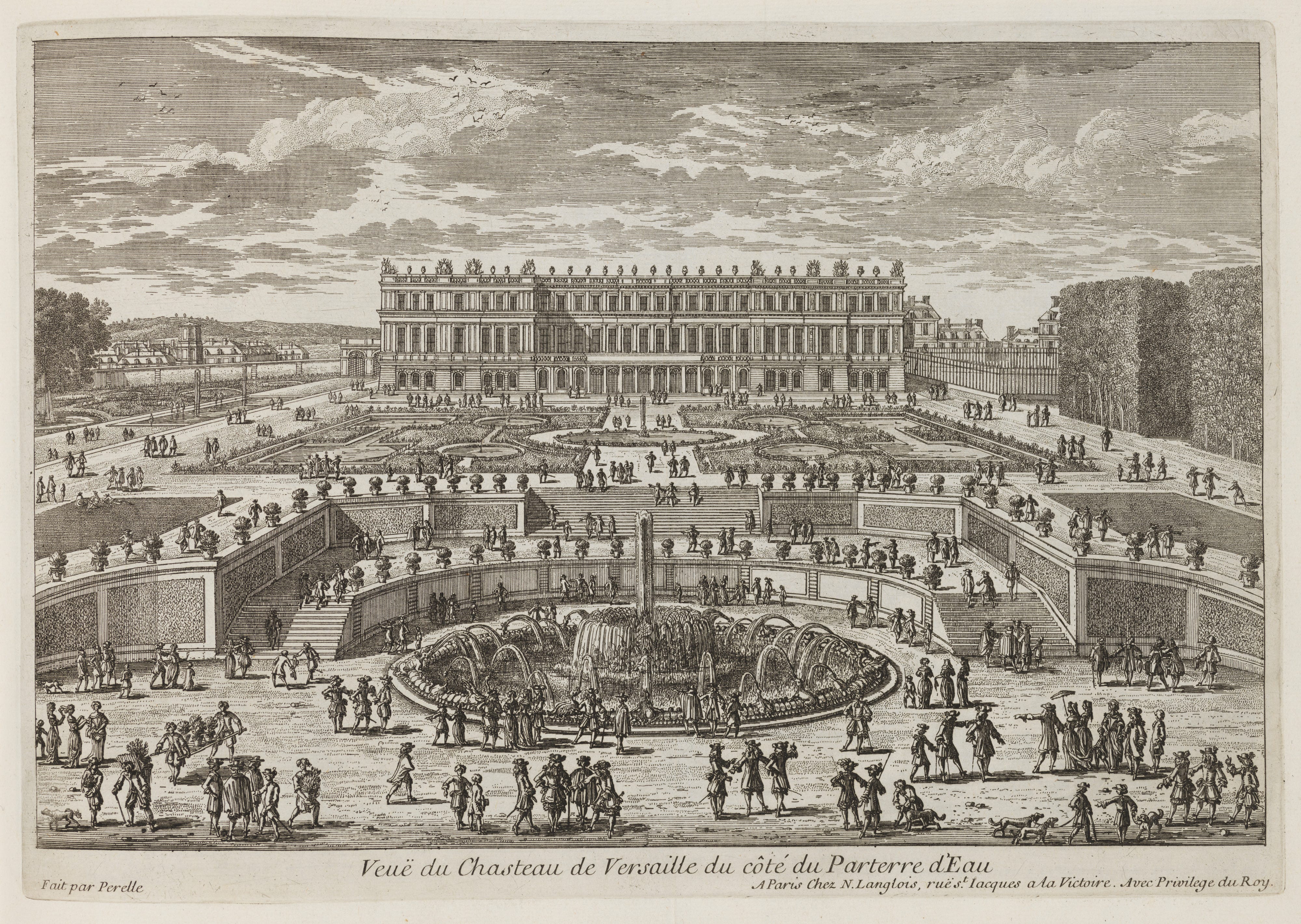
1500 years later, Western Europe was still largely holding to the view that nature was, above all, something to be subdued and contained. The late-17th-century Gardens of Versailles typified the French formal garden style of landscaping that was popular in Europe at the time. As seen in the image below, these gardens were characterized by aggressively manicured lawns and shrubs broken up by prominent walking paths and man-made fountains. The primary symbolic message of the Gardens of Versailles was humankind’s dominance over nature. Across the Atlantic, during the same period, North America’s English colonists were coming face to face with the American wilderness. They, too, largely saw untamed nature as something to be feared or conquered rather than admired or embraced. They often saw themselves as the godly forces of civilization in a battle against the heathen, demon-infested wilderness. Robert Eggers’ 2015 film The Witch paints an excellent picture of the uneasiness and fear English colonists often felt toward the seemingless endless forests of North America.
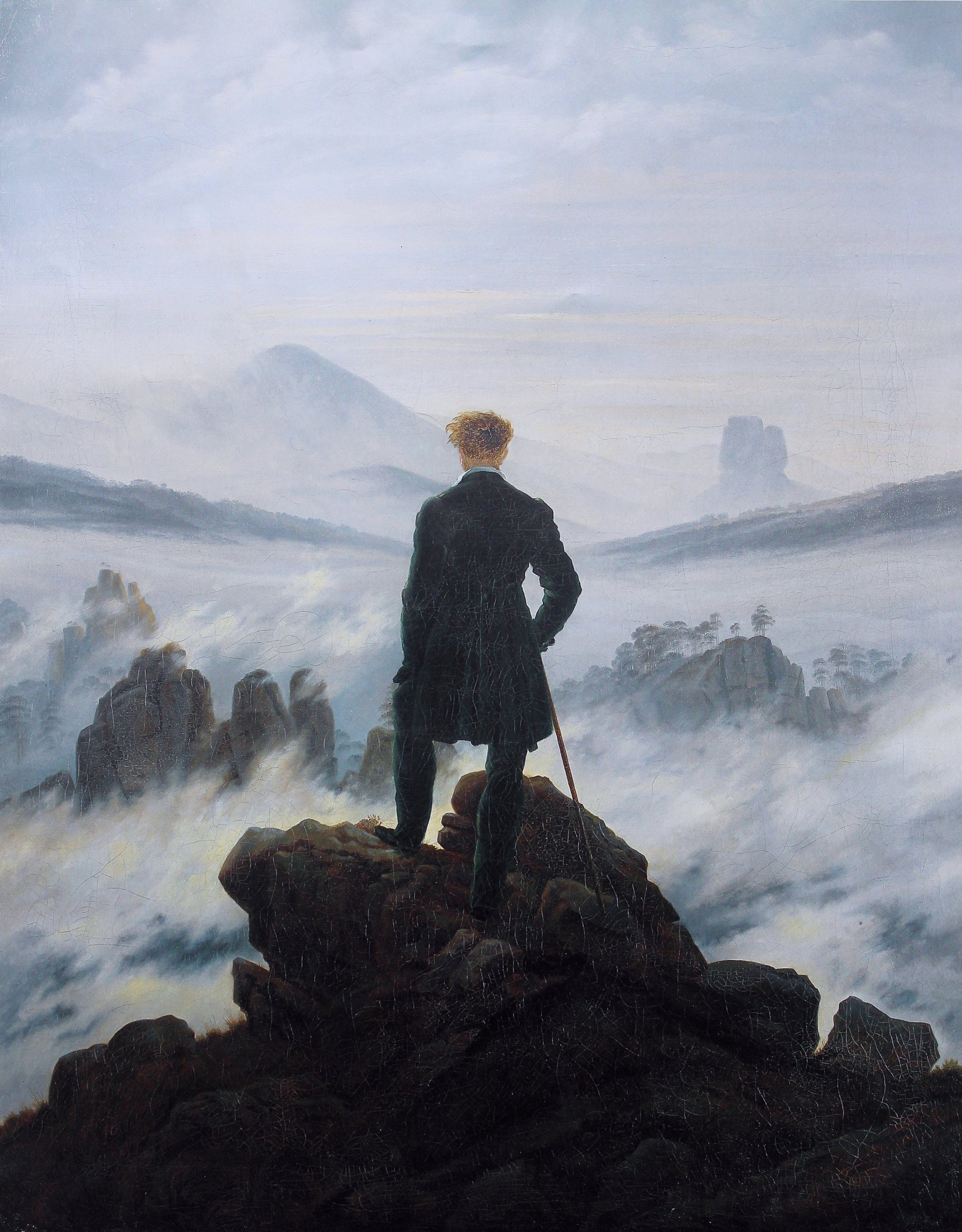
Western attitudes toward nature began to shift significantly at about the turn of the 19th century in connection with the rise of the Romantic artistic and intellectual movement. Romanticism, in reaction to both the rationalism of the Enlightenment and the rise of industrialization in Europe, emphasized subjectivity, creativity, and passion. Romanticism began to see the chaos and unbridled immensity of nature as ultimately beautiful rather than simply terrifying. Romanticism suggested that people ought to observe uncultivated nature with awe and wonder, not fearfully struggle to tame it and hem it in. An oft-used example of the Romantic attitude toward nature is German artist Caspar David Friedrich’s 1818 oil painting Wanderer above the Sea of Fog, pictured below. The piece depicts a gentleman gazing out into a wild and seemingly endless tableau of misty rock outcroppings and tree-covered slopes. Whereas the Gardens of Versailles communicated an ideal of nature placed under the forceful custodianship of humankind, the man in Friedrich’s painting does nothing more than contemplate nature for what it is in its savage state. The Romantic shift in attitudes toward wilderness would cross the Atlantic over the course of the next century and be championed by people such as Scottish-American naturalist and activist John Muir, whose influential advocacy for the preservation of wilderness areas contributed to the establishment of Yosemite and Sequoia National Park in 1890.
21st-century Americans are generally more likely to worry about the dangers of industrialization and human encroachment on nature than they are to worry about the dangers of nature’s encroachment on civilization. An admiration or idealization of wilderness comes easily to the vast majority of Americans who live in a world in which wilderness has been sliced up, managed, and contained in ways the first Europeans to set foot in North America couldn’t have imagined. The continental United States is almost one large Gardens of Versailles. Yet, in spite of how different our economic, geographic, and cultural realities are from those of earlier people, the woods still have the ability to strike us as spooky. One almost wonders if a baseline tendency toward uneasiness about forests is evolutionarily hardwired into us. Or perhaps the fact that the lives of most Americans are currently radically separated from dealings with nature that isn’t intensively managed makes encounters with the woods feel more dangerous than they actually are. Our lack of familiarity leads to uneasiness. The English colonists had quite a bit to fear from the forests of the “New World.” Apex predators had not yet been culled from the land, and indigenous people did not always take kindly to intrusions. The forests Americans encounter today are far less vast and far less dangerous, but, judging from paranormal reality television, we populate them with danger anyway. Instead of wolves, we point to creatures not yet recognized by science. Instead of the defensive threats of indigenous people, we point to spirits.
The existence of spooky forest reality shows also indicates that scary encounters in the woods are a source of fascination and delight for 21st-century Americans. While researching my dissertation, I asked members of a paranormal Facebook group called “TELL A GHOST STORY” about why they enjoyed shows like These Woods Are Haunted. One woman responded, “I love the woods. I live in the Mountains of East Tennessee. Our land has many spirits. Including Native Americans. I guess that is why they interest me so much.” When asked to say more about the connection between her personal experiences and the reality shows, she wrote, “it’s validating that there are things out there we can’t explain.” Another woman reported that the shows draw her toward exploring the unexplained for herself: “I think I am already afraid of the woods. But it makes me more interested to explore to see if I could feel, hear or experience anything out of the ordinary.” A recurring theme in my work has been the way that terrifying encounters with the unknown also provoke an overwhelming fascination for many modern people. This is because, even though encounters with spirits and other uncanny beings can be disorienting and frightening, they also provide a glimpse into an exciting hidden reality. For example, it might be terrifying to see a ghost, but an apparition also points to an existence beyond death. Being chased by a Bigfoot doesn’t sound enjoyable, but such an encounter would prove that there are things in nature that even the experts don’t understand.